Designing for the Digital Divide

Today saw the release of the 2017 Australian Digital Inclusion Index, which can be downloaded from the Telstra Sales Portal Digital Inclusion website. The report had some positive, although expected, conclusions in that digital inclusion is increasing right across the board, which is the good news. What caught my eye however were the specific mentions of the sociodemographic groups which are the most digitally excluded across the country, specifically:

“…people in low income households, people aged 65+, people with a disability, people who did not complete secondary school, Indigenous Australians, and people not in paid employment.”
Read more

Evaluating leadership through structured team feedback

Creative Commons licensed from Michael Porter - https://www.flickr.com/photos/libraryman/As the year draws rapidly to a close, the thoughts of many a manager turn to that most dreaded of annual tasks – the performance review. Often ignored, frequently monolithic, a good idea that has been lost in translation to some awful Word document template. Dislike them or loathe them, they are out there. Sadly, this kind of prescriptive process can often discourage what should be a worthwhile activity, that of providing some sort of formal feedback to staff on their year in review, hopefully as a supplement to the regular feedback they have been getting throughout the year (wishful thinking, I know).

But what about feedback going the other way from staff given to their managers, particularly in the case of senior level managers?

In my fifteen years of reporting to senior managers or executives, not once have I been asked for formal feedback on their performance throughout the year. Don’t get me wrong, I’ve had some really good managers (and some bloody awful ones), but not once has any of them given me a formal opportunity to provide structured feedback. This year, to show that I’m willing to lead by example, I’ve set up a formal feedback process to give my senior leaders the chance to share their thoughts on my 2016.

Read more

The Student Services conundrum: Part 3 – graduate outcomes and the (potential) role of the service centre

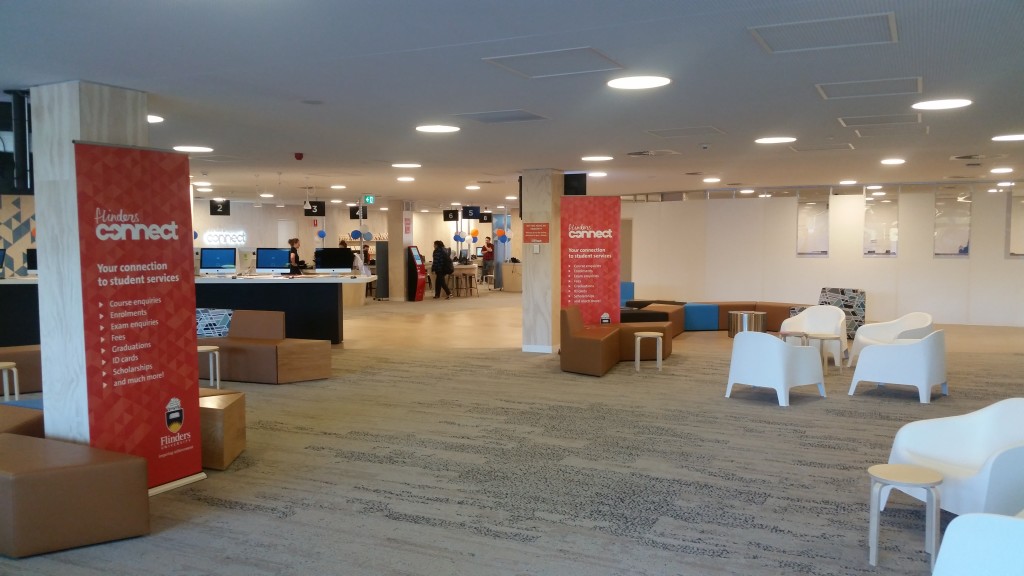
20151002_162309In the first two posts of this trilogy I discussed the background of the Flinders Connect student service centre and a strategy for driving the highest value from a combination of online self-service, service centre support, and more focused interactions. In this final post, I want to explore something which sets the University context apart from that of (say) a bank, a telco or a government department.

That something is one of the goals of of all Universities: to develop strong graduate capabilities within students as a fundamental outcome of attending University.

Read more

The Student Services conundrum: Part 2 – the complexity vs capability equation

In the first post of this trilogy I set the scene around the creation of a new student service centre, and noted that many of the enquiries answered during our first ‘peak’ period at the start of Semester 1 could have been very easily done by students online. The question I posed at the end was which enquiries could have we avoided by having them done online via self-service, and how could we have achieved that?

Before I get into proposing answers to that question I want to consider another one – why should we drive enquiries online in the first place? 

Read more